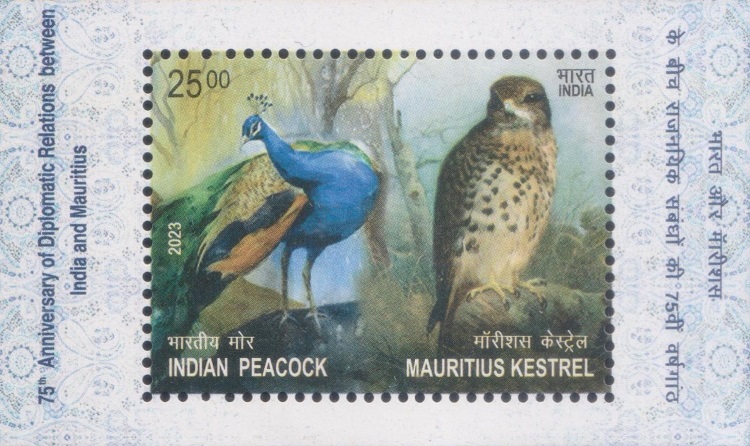






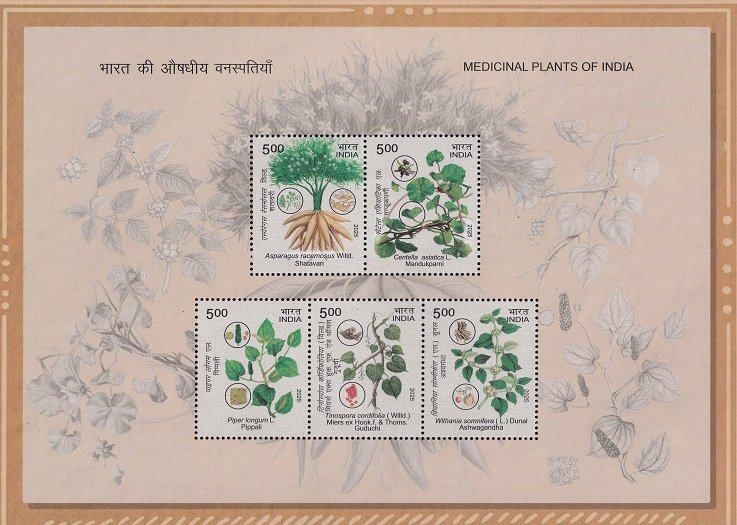
The 2025 Medicinal Plants of India issue showcases five treasured plants – Shatavari, Mandukparni, Pippali, Guduchi and Ashwagandha – highlighting India‘s rich botanical wealth and traditional medicinal knowledge :
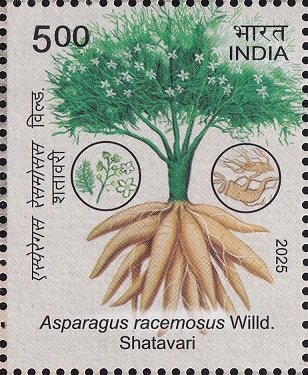
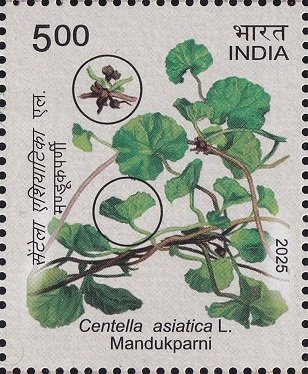
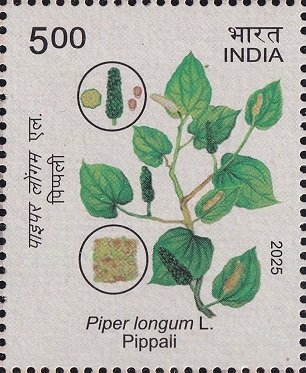
 Issued by India
Issued on Dec 19, 2025
Issued for : Department of Posts is proud to issue a set of Commemorative Postage Stamps honoring the treasures of nature and traditional knowledge of India, promoting well-being and health through vital medicinal plants like Shatavari, Mandukparni, Pippali, Guduchi and Ashwagandha.
Credits :
Stamps/Souvenir Sheet/FDC/Brochure/Cancellation Cachet : Shri Anuj Kumar
Type : Miniature Sheet, Mint Condition
Colour : Multi Colour
Denomination : 500 Paise (5)
Souvenir Sheet Price : 2500 Paise
Souvenir Sheets Printed : 1,11,000
Printing Process : Wet Offset
Printer : Security Printing Press, Hyderabad
About :
- India’s geographical diversity has blessed it with an unparalleled wealth of medicinal plants, which form the bedrock of various traditional systems of Medicine. The following five plants, in particular, showcase the varied therapeutic potential and the targeted use of specific plant parts in healing practices:
- Asparagus racemosus Willd. (Shatavari):
- The plant is a perennial, prickly climber and a highly branched undershrub found throughout the tropical and subtropical regions of India. It is used as an adaptogen to help the body manage stress, supporting reproductive health, digestion, immunity, and overall vitality.
- Centella asiatica L. (Mandukparni):
- A perennial prostrate herb with creeping stems that root at the nodes, it has simple, reniform leaves with long petioles. The inflorescence is a loose, sub-capitate umbel. The dried whole plant is used for fever, itching, cough and anemia.
- Piper longum L. (Pippali):
- A slender, aromatic, creeping perennial herb, the plant is used in dyspepsia, abdominal pain and diuretic splenopathy, anorexia, asthma and fever.
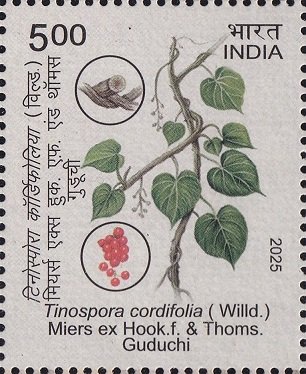
- Tinospora cordifolia (Willd.) Miers ex Hook.f. & Thoms. (Guduchi):
- A large, extensively spreading perennial woody climber with succulent stems, its stem is used for treating fever, cough, gout, worm infestation, anemia and skin diseases.
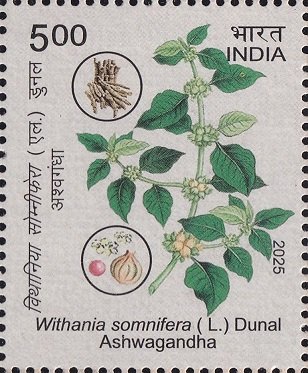
- Withania somnifera (L.) Dunal (Ashwagandha):
- A perennial herb and erect, branched undershrub growing up to 1.25 m in height. It is useful as a rejuvenator and promotes intellect, stability and strength.
- Asparagus racemosus Willd. (Shatavari):
- India is not only home to diverse medicinal plants but also a global centre of botanical knowledge, with traditional systems documenting nearly 8,000 plant-based remedies. A large share of the population, especially in rural areas, still depends on these accessible and time-tested natural medicines. Growing global preference for safe, holistic, plant-based products has further increased demand, making India one of the world’s leading exporters of medicinal plants and a key supplier to the herbal, nutraceutical and pharmaceutical industries.
- Text : Based on the content provided by National Medicinal Plants Board, Ministry of AYUSH.